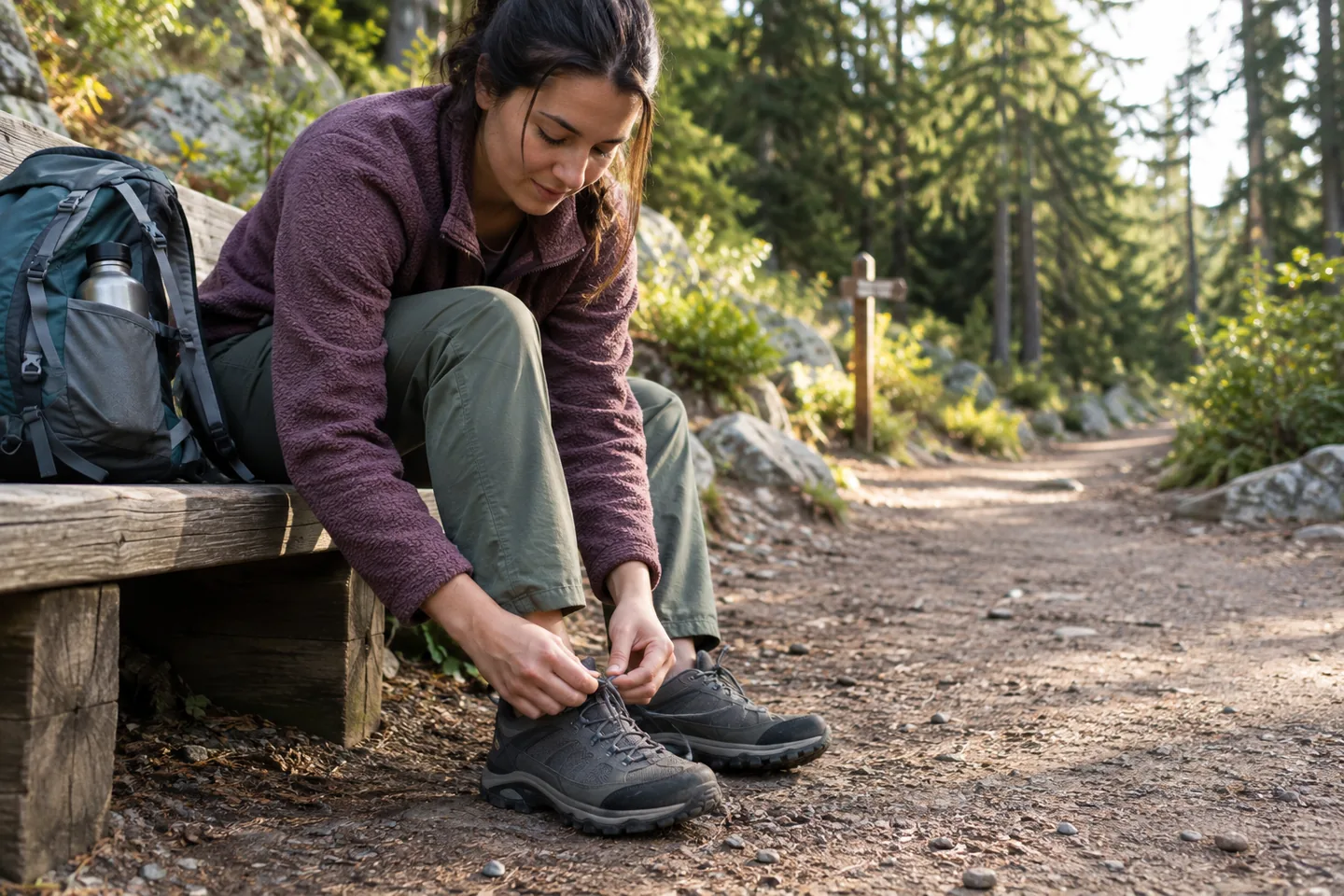
A comfortable trail shoe has to work after feet warm and swell, not only during a five-minute store try-on. A stable heel and roomy forefoot matter on a long descent, while waterproofing is a tradeoff between weather protection and breathability.
The short list
| Pick | Best for | Tradeoff |
|---|---|---|
| Merrell Moab 3 Best familiar all-rounder | Moderate trails and wider fit preferences | The sturdy build feels heavier and less flexible than trail-running-inspired shoes. |
| Salomon X Ultra 5 Best agile trail option | Rocky paths and hikers wanting a secure hold | The shaped fit can feel narrow or structured for broad forefeet. |
| HOKA Anacapa 2 Low GTX Best cushioned waterproof pick | Wet trails and hikers preferring a softer ride | Waterproof construction runs warmer and the high cushioning changes ground feel. |
Our picks, by real-life fit
1. Merrell Moab 3
Best for: Moderate trails and wider fit preferences
A long-running hiking line offers several widths and waterproof or ventilated variants.
The tradeoff: The sturdy build feels heavier and less flexible than trail-running-inspired shoes.
2. Salomon X Ultra 5
Best for: Rocky paths and hikers wanting a secure hold
A trail-focused chassis and grippy outsole aim for stability without a full boot.
The tradeoff: The shaped fit can feel narrow or structured for broad forefeet.
3. HOKA Anacapa 2 Low GTX
Best for: Wet trails and hikers preferring a softer ride
A cushioned low-cut platform pairs a waterproof membrane with trail-oriented traction.
The tradeoff: Waterproof construction runs warmer and the high cushioning changes ground feel.
How to choose without overbuying
The highest specification is rarely the most useful specification. Start with the repeated situation that made you search for this product, then use these rules to remove options that create more work than they save.
- Fit the heel before judging toe space.
- Walk an incline during the try-on.
- Choose waterproofing only for the conditions you face.
- Leave room for normal foot swelling.
A routine that makes the purchase work
Products earn their place through habits, storage, and maintenance. This simple setup is more valuable than adding another accessory on day one.
- Break shoes in on shorter walks.
- Dry them at room temperature after wet use.
- Replace them when cushioning or outsole grip is materially worn.
What we would not do
- Buying by street-shoe size alone.
- Using waterproof shoes as a substitute for gaiters in deep water.
- Ignoring hot spots during the first hour.
We base product statements on current published information and make an editorial inference about who each option fits. We do not claim hands-on testing, durability measurements, or performance benchmarks that ChoicesVera did not conduct.
The bottom line
Foot shape is personal. Try shoes late in the day with hiking socks, use a retailer with practical returns, and seek professional guidance for persistent pain. Compare the return policy and current price before ordering, especially when fit, feel, or compatibility cannot be confirmed from specifications alone.
Frequently asked questions
Shoes or hiking boots?
Shoes are lighter and flexible; boots add coverage and may add support. Terrain, load, fit, and preference matter.
Should hiking shoes feel tight?
They should hold the heel securely without crushing the forefoot or letting toes hit the front downhill.
Do I need waterproof shoes?
They help in cold wet conditions, but nonwaterproof shoes breathe and dry faster in warm weather.
Sources and fact check
Product details last checked 2026-09-17. Prices and availability change; ChoicesVera does not publish fixed price claims on this page.